
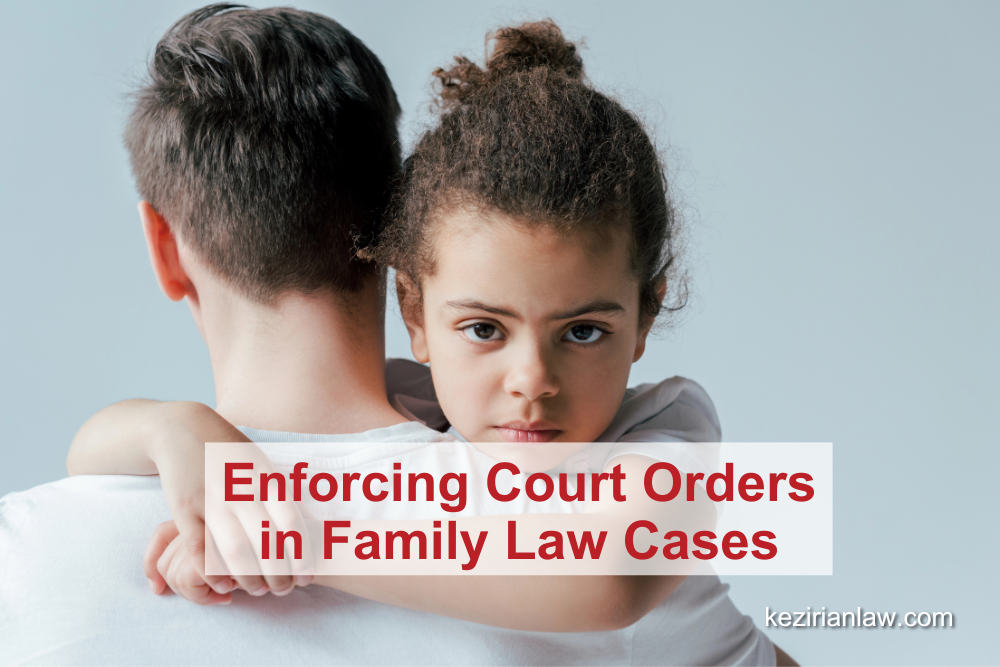
When court orders aren’t being followed: you’re not alone. You’ve made it through your divorce or custody proceedings, relief mingling with hope as you move forward with a court order in place—an agreement outlining child support, custody, or visitation terms. But what happens when the other parent doesn’t honor it? Missed visitations, unpaid child support, or constantly changing handoff times can create confusion, stress, and emotional upheaval for everyone involved—especially the children.
At Kezirian Law, we speak with many clients who feel unsure or even guilty about taking legal steps to enforce their family court orders. But ensuring compliance isn’t about conflict—it’s about stability, fairness, and the best interests of your children.
Understanding Your Rights and Options
Court orders in family law are not suggestions—they are legally binding instructions issued by a judge. If one party doesn’t comply, the other has the right to seek enforcement through the legal system.
In California, enforcement options vary depending on the type of order being violated:

Child Support: If a parent isn’t paying court-ordered child support, you can take legal steps to recover the missed payments. The Department of Child Support Services (DCSS) can assist, or you can work with your attorney to bring the matter to court.
Common enforcement tools include:
– Wage Garnishment: The court can order the other parent’s employer to withhold child support payments directly from their paycheck.
– Intercepting Tax Refunds: Past-due support may be deducted from state or federal tax refunds.
– License Suspensions: Courts may suspend a driver’s or professional license until payments are made.
Child Custody and Visitation: When custody or visitation orders are not followed—whether a parent is denying access to the child or failing to show up during designated times—you can ask the court to intervene.
Courts may:
– Order make-up visitation time.
– Modify the existing custody arrangement if one parent repeatedly disobeys the order.
– In severe cases, hold the violating parent in contempt of court, which can carry fines or even jail time (though that’s typically a last resort).

It’s essential to document violations carefully: keep records of missed exchanges, late pickups, or communication that proves non-compliance.
Three Key Steps to Take if a Court Order is Being Ignored
- Keep Detailed Records
When you’re frustrated or emotionally drained, it can be easy to let instances of non-compliance slide or go undocumented. However, objective, detailed records are essential if you need to return to court. Note dates, times, and any communications (texts, emails, or call logs) that show missed child support payments or visitation conflicts.
- Reach Out—But Stay Respectful
Sometimes, misunderstandings or life changes (like a job loss or illness) cause temporary lapses. If it feels safe and appropriate to do so, a calm and respectful check-in with the other parent may help resolve the issue without going to court. That said, never ignore repeated or intentional violations: your child’s consistency and your well-being matter.
- Consult an Experienced Family Law Attorney
You don’t have to figure things out alone. An experienced family law attorney can help you assess your situation, gather necessary documentation, and guide you through the process of enforcing your court order. Whether you’re dealing with consistent unpaid support or a co-parent who refuses to follow custody rules, legal support is key to protecting your rights and your child’s best interests.
You Deserve Reliability and Peace of Mind
At Kezirian Law, we understand how challenging it can feel when your co-parent isn’t holding up their responsibilities. You brought your case before the court because you wanted structure, fairness, and a more stable future for your family. If that path is being disrupted, we’re here to stand beside you—with experienced counsel and compassionate support.

If you’re struggling with non-compliance of a custody, support, or visitation order, don’t wait silently. Contact Kezirian Law today to schedule a consultation and learn how we can help restore clarity and accountability to your family’s legal agreements.