Child Custody

Don’t Settle for Less: Why You Need a Fighter in Your Corner for Family Law Matters

Family law matters, such as divorce and child custody, can be some of the most challenging experiences of a person’s life. These are deeply personal issues, laden with emotion and often high stakes, making it critical to have an assertive legal representative. A skilled divorce attorney with a fighter’s mentality can help protect your rights and work tirelessly to secure the best possible outcome. Let’s explore why it’s essential to have a determined advocate prepared to go to trial if necessary. The Importance of Representation Family law requires more than just a lawyer; it requires a warrior who can navigate the legal battlefield with precision and dedication. With vital issues like the division of marital assets, alimony, and child support at stake, settling for a mediocre defense isn’t an option. An aggressive attorney on your side means your rights and interests are actively protected. Choosing a lawyer willing to go to trial sends a powerful message. It tells the opposing party that you’re ready to fight to safeguard your future, potentially leading to better settlement offers as they recognize your unwavering resolve. This is not about unnecessary confrontation; it’s about having a strategic plan and being ready to persevere through complex legal terrain. Litigation: Strong Advocacy in Action When negotiation attempts fail or aren’t in your best interest, litigation might be the path forward. A committed family lawyer is well-versed in trial preparation—an integral part of litigation that demands organization, a deep understanding of legal nuances, and compelling evidence presentation. Trial preparation involves collecting pertinent evidence, preparing witnesses, and crafting a narrative that aligns with your case’s favorable aspects. It’s about becoming the most compelling advocate in the courtroom and ensuring every detail is meticulously thought out. Crafting a Personalized Legal Strategy An adept family attorney recognizes that there’s no one-size-fits-all approach to legal battles. Each case requires a personalized legal strategy, designed around your life’s specifics and desired outcomes. Here’s what to expect from a solid legal strategy: Customization: Every family dynamic is unique, and a one-size-fits-all approach won’t do. Your attorney should tailor their strategy to your particular circumstances. Comprehensive Research: A successful legal strategy is born from exhaustive research and a thorough understanding of your case’s legal aspects and human factors. Communication: Ongoing dialogue with your lawyer ensures that your goals and expectations are always at the forefront of your case strategy. Adaptability: Legal battles are fluid, and your attorney should be versatile and able to pivot strategies swiftly to adapt to new developments or information. The Crucial Role of a Fighter in Child Custody Cases Child custody cases are profoundly sensitive, involving your children’s future welfare and happiness. During such pivotal legal proceedings, you need an attorney who does more than understand the legal codes—they must operate with empathy, dedication, and unwavering tenacity. An assertive approach can make a significant difference, especially when the child’s well-being is at stake. Your attorney’s determination and clear plan can ensure that custody agreements are fair, focusing on what’s best for the child, while fiercely advocating for your parental rights. Entrust Your Family Law Matters to Kezirian Law, P.C. Regarding handling family law disputes, Kezirian Law, P.C. is a law office known for strong advocacy and commitment to protecting clients’ interests in contested matters. Their attorneys are fighters with both strategic acumen and the compassion required for these emotionally charged cases. Choosing Kezirian Law, P.C. means aligning yourself with a legal team that prepares for litigation and sees each client as an individual. Their hands-on approach ensures your concerns are heard and your rights are defended to the utmost, whether in mediation or court. You aren’t just another case; you’re a person with a life, a story, and a future they are committed to protecting. Let this fierce dedication be your advantage in the courtroom and beyond.

Don’t Settle for Less: Why You Need a Fighter in Your Corner for Family Law Matters Read More »

Custody and Holidays: Balancing Fun and Responsibility

The holiday season, a time filled with joy and celebration, can bring unique challenges for divorced families navigating child custody arrangements. Striking a balance between ensuring children’s happiness and fulfilling responsibilities can be complex, but with careful planning and open communication, divorced parents can create a festive and harmonious experience for their children. Here’s how to manage holiday custody arrangements effectively, with a focus on beneficial outcomes for all involved. Understanding Holiday Custody Arrangements Child custody around the holidays may involve a different approach than during the rest of the year. In Fresno, family law highlights the importance of structured custody schedules, providing a clear framework for both parents. However, flexibility is often key during special occasions to accommodate celebrations and traditions that are meaningful to both parents and children. Prioritizing Children’s Welfare When it comes to custody and holidays, children’s welfare should always be the primary focus. Ensuring that children feel loved and protected, even in new family dynamics, is crucial. Parents should aim to reduce stress and confusion by explaining any changes in the schedule well in advance, allowing children to adapt to and anticipate the holiday plans. Planning Ahead Effective holiday coordination begins with early planning. Parents can sit down together months before the holiday season kicks in to discuss and agree on where the children will spend each holiday. Having a detailed schedule not only helps prevent misunderstandings but also provides stability for the children. Open Communication Communication is central to navigating custody and holiday challenges. Both parents should work on maintaining open lines of communication, focusing on what is best for their children. Using a positive and cooperative tone helps mitigate potential conflicts and ensures that both parties are heard and understood. Flexibility and Fairness While sticking to a pre-established custody schedule is important, some flexibility around the holidays can lead to a more joyful experience for the children. Parents can consider alternating holidays annually or splitting time during the holiday break, ensuring that both have quality time with their children. For instance, if one parent has the children on Christmas Day one year, the other parent might have them for New Year’s that same year and Christmas the following year. This kind of arrangement promotes fairness and inclusiveness, allowing children to engage in traditions from both sides of the family. Creative Solutions Parents can also explore creative solutions to holiday custody. For example, if traveling long distances is involved, consider having a virtual holiday dinner together using video calls. This can help maintain traditions and keep family bonds strong despite physical distances. Additionally, families can celebrate holidays like Easter or Thanksgiving on alternative weekends, thereby ensuring celebrations are still enjoyed without compromising the original custody schedule. Celebrating Together In some cases, divorced parents find it beneficial for children to see them come together during certain holiday events. If interactions remain civil and the situation is comfortable for all parties, jointly celebrating a portion of the holidays can be a meaningful gift to the children. This scenario, of course, requires mutual understanding and respect. Legal Considerations When making custody arrangements, keep in mind any legal restrictions or requirements that may apply. It’s essential to have all agreements documented and, if necessary, approved by a court to ensure compliance and prevent future disputes. Legal professionals, such as those at Kezirian Law can provide guidance and support for parents navigating these processes. Personalized Support from Kezirian Law Balancing the joys of the holidays with the responsibilities of shared custody doesn’t have to be daunting. With proactive planning, open dialogue, and a focus on children’s happiness, divorced parents can manage holiday arrangements that are fair, fun, and fulfilling. Kezirian Law specializes in providing our clients with thoughtful and personalized representation through emotionally difficult proceedings. Consulting with legal experts can offer valuable insights and assistance in crafting arrangements that suit your unique family dynamics. By keeping the spotlight on children’s welfare and ensuring equal participation in holiday celebrations, parents can create lasting and cherished memories for their children, helping them experience the true spirit of the holidays.

Custody and Holidays: Balancing Fun and Responsibility Read More »

Holiday Custody Agreements: How Family Law Protects Your Rights During the Festive Season

Families look forward to celebrations, laughter, and cherished moments as the holiday season approaches. For divorced or separated parents, however, the holidays can also bring challenges regarding child custody arrangements. Understanding your rights under family law can help ensure fair and enjoyable holiday custody agreements. Today, we’ll explore how holiday custody agreements are supported by family law, with a focus on the Fresno area, to ensure compliance and protect your rights during this festive time. Understanding Holiday Custody Arrangements Navigating custody during the holidays requires parents to balance their schedules, emotions, and the best interests of their children. Whether you’re in Fresno or beyond, understanding how family law supports these arrangements can make the process smoother. Holiday custody agreements are often an extension of a court’s regular child custody arrangements. These agreements specify how holidays will be divided between parents, ensuring both can spend quality time with their children. Parents may alternate holidays each year, share the day equally, or assign specific holidays to each parent. Court-enforced custody orders play a pivotal role by providing a clear, enforceable schedule that both parents must follow. The Role of Fresno Family Law Family law in Fresno, as in other regions, ensures that holiday custody agreements are fair and equitable. Family law upholds the child’s welfare, which includes maintaining strong relationships with both parents during the holiday season. When crafting or modifying holiday custody agreements, parents should consider mediation with legal guidance. Fresno family law attorneys can help parents negotiate terms that reflect the child’s needs, school schedules, and the logistical realities of each parent’s living situation. Legal Custody Rights During Holidays Parents often wonder how legal custody rights are upheld during the holidays. Legal custody allows parents to make significant decisions about their child’s upbringing. During the holidays, this might include decisions about travel, celebrations, and religious observances. Family law’s clear structure supports parents in reaching agreements that respect each other’s rights and maintain the intent of shared legal custody. Ensuring fair custody for holidays often requires compromise and open communication, ideally facilitated with the help of experienced family law professionals in Fresno. Ensuring Compliance with Holiday Custody Orders Compliance with holiday custody orders is crucial to ensuring that holiday arrangements proceed smoothly. Both parents should adhere to the agreed schedule to avoid unnecessary conflicts that could overshadow the season’s joy. When disputes arise, family law provides mechanisms for resolution, often through mediation or court intervention if necessary. Family law attorneys, especially those familiar with regional practices in Fresno, can offer additional stipulations within custody agreements to address potential holiday-specific issues. For instance, agreements can include terms dealing with international travel permissions or stipulations about gift exchanges. How Kezirian Law Can Help Kezirian Law understands the delicate nature of holiday custody agreements and is committed to promoting, preserving, and restoring healthy family relationships during these challenging transitions. Our team brings a wealth of experience in Fresno family law and works diligently to support parents in crafting clear, enforceable custody agreements that honor each family’s unique traditions and values. Our office can assist in reviewing existing custody agreements or help parents develop new holiday arrangements that reflect changes in family dynamics. We strive to ensure that every child’s holiday experience is filled with love and continuity, bolstered by legally sound arrangements. If you’re seeking guidance on holiday custody agreements, trust Kezirian Law to navigate the complexities of family law with compassion and expertise. We unite families with tailored legal solutions that respect and preserve the joyous spirit of the holidays, helping you and your loved ones focus on what truly matters. Contact us today to learn more about how we can assist you in upholding your holiday custody rights.

Holiday Custody Agreements: How Family Law Protects Your Rights During the Festive Season Read More »

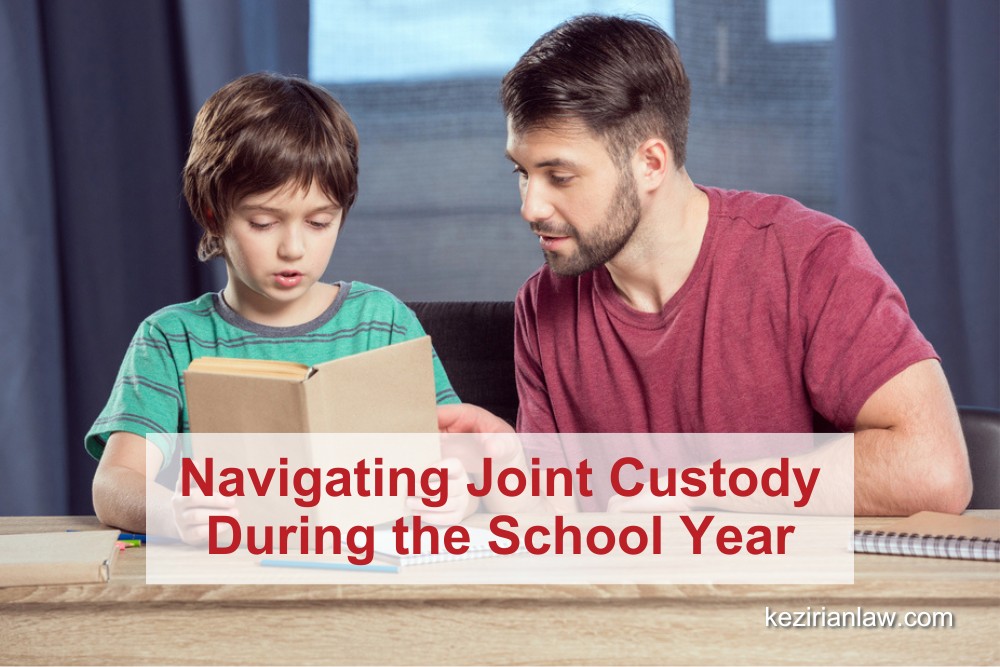
Navigating Joint Custody During the School Year

Divorce is never easy, and managing joint custody during the school year adds another layer of complexity to an already challenging situation. As a law office with extensive experience in family law, we at Kezirian Law, understand the difficulties divorced parents face in maintaining effective custody arrangements to ensure their children’s educational stability and well-being. This blog provides practical tips and strategies for managing joint custody during the school year, focusing on custody agreement adaptation, school activities coordination, and maintaining academic success through effective parental cooperation. Custody Agreement Adaptation A well-structured custody agreement is foundational to a smooth co-parenting experience during the school year. However, academic schedules and extracurricular activities can create unforeseen challenges, necessitating periodic adaptations to custody arrangements. 1. Review and Update Custody Agreements: Regularly review your custody agreement to ensure it aligns with your children’s evolving academic needs and extracurricular schedules. Be open to making necessary adjustments that prioritize your children’s educational stability. 2. Flexible Scheduling: Incorporate flexibility into your custody arrangement. Understand that school events, parent-teacher conferences, and unexpected school closures may require quick adjustments. Build in mechanisms for these contingencies to avoid conflicts. 3. Shared Calendar Tools: Utilize shared digital calendars to keep track of school schedules, extracurricular activities, and other important dates. This fosters transparency and helps both parents stay informed, reducing misunderstandings and conflicts. School Activities Coordination Coordinating school activities between two households requires effective communication and collaboration. By working together, you can ensure that your child remains actively engaged in their school life without feeling the strain of parental discord. Communicate Regularly: Establish a consistent communication routine to discuss your child’s school activities, academic progress, and any concerns that arise. Whether it’s through weekly check-ins or a shared online journal, keeping each other informed is vital. Attend Events Together: When possible, attend school events, parent-teacher conferences, and extracurricular activities together. This demonstrates a unified front and reinforces to your child that both parents are involved and invested in their well-being. Delegate Responsibilities: Divide responsibilities to avoid overlap and ensure that all aspects of your child’s educational experience are covered. For example, one parent could handle the logistics of transportation to and from school, while the other oversees school supply purchases and homework routines. Ensuring Educational Stability Stability and consistency are crucial for any child, especially during the school year. Strive to create a seamless experience between both households to support your child’s academic success and overall well-being. Consistent Routines: Maintain similar routines in both households to provide consistency for your child. A predictable schedule for homework, meals, and bedtime can help your child thrive academically and emotionally. Coordinate Academic Support: Work together to support your child’s academic needs. This could involve shared tutoring responsibilities, helping with homework, or ensuring that both homes have necessary school supplies and a conducive study environment. Monitor Academic Progress: Regularly review your child’s academic progress and discuss any areas needing improvement. Stay in contact with teachers and school counselors to address concerns promptly and develop strategies to support your child’s learning. Parental Involvement Post-Divorce Divorced parents can successfully manage joint custody by prioritizing their child’s needs and fostering an environment of cooperation. Here are some tips for maintaining effective parental involvement post-divorce: 1. Positive Communication: Foster a positive communication environment free from conflict. Use respectful, clear, and constructive dialogue when discussing issues related to your child’s education and custody arrangement. 2. Unified Decision-Making: Aim to make important decisions together, ensuring that both of you are on the same page. This includes decisions about academic paths, extracurricular activities, and any special educational needs. 3. Neutral Drop-Off Zones: Establish neutral drop-off and pick-up zones, such as the child’s school, to minimize potential conflicts and provide a smooth transition for your child. Overcoming Shared Parenting Challenges Every family faces unique challenges, but with mutual respect, effective communication, and a focus on your child’s best interests, you can overcome the difficulties of shared parenting. 1. Conflict Resolution Mechanisms: Establish mechanisms for resolving conflicts amicably. This could involve setting up regular mediation sessions or seeking guidance from a family counselor to navigate disagreements constructively. 2. Focus on the Child: Always keep your child’s best interests at the forefront. Avoid putting them in the middle of disputes, and reassure them of your love and support from both parents. 3. Self-Care for Parents: Remember to take care of your own emotional and mental health. By managing stress effectively and seeking support when needed, you can be a more present and supportive parent. Managing joint custody during the school year presents its own set of challenges, but with careful planning, open communication, and a focus on your child’s well-being, you can create a supportive and stable environment for their academic success. At Kezirian Law we are committed to helping divorced parents develop effective custody arrangements that prioritize educational stability and parental involvement. If you need assistance with your custody agreement or seek advice on how to better manage joint custody during the school year, do not hesitate to reach out to our experienced legal team. Together, we can work towards a collaborative, child-centered approach that fosters your child’s growth and happiness. By adapting custody agreements, coordinating school activities, ensuring educational stability, maintaining parental involvement, and overcoming shared parenting challenges, you can successfully manage the school year, providing the best possible environment for your child’s academic and personal development.

Navigating Joint Custody During the School Year Read More »

Improve Coparenting Communication by Using the coParenter App

Comprehensive Help for Coparents CoParenter is designed to help divorced parents make better decisions while reducing the need to go back to court to renegotiate custody arrangements and resolve disputes. The app incorporates a number of important features that can make it easier to share parenting responsibilities with your former partner. Some of the most important capabilities of the coParenter app include the following: Documentation of all messages exchanged between you and your former partner In-app tracking for expenses and reimbursements Check-in capabilities for you, your children and your former spouse Coaching on a group or one-on-one basis On-demand conflict resolution services Each of these features can provide real help for you and your former spouse in navigating your parenting tasks after your divorce. Documenting Your Messages Tracking and keeping meticulous records for all the communications you have with your former spouse is essential for establishing patterns and making sure that your ideas and concerns are documented. This can help you in dealing with changes in custody arrangements, disagreements about child-rearing issues and other conflicts that could potentially arise during your parenting process. Tracking for Financial Transactions Especially if child support is involved in your coparenting efforts, making sure you track the expenses you incur for your children and the payments you make to your former spouse will help ensure equitable distribution of expenses for both of you. This will ensure that no mistakes are made when recording financial transactions after your divorce. Check-ins Letting your former partner know when you and your child have arrived at soccer practice, music lessons or back at home will help you both manage your schedules more effectively. The check-in capabilities of coParenter will make it much easier to share information about your child’s whereabouts and his or her activities on an ongoing basis. Coaching Services and Conflict Resolution The coParenter app also allows you and your former partner to access customized coaching services that will provide you with the best guidance on dealing with the challenges of parenting after a divorce. The app also offers the opportunity to engage with qualified conflict resolution experts who will provide added help in dealing with serious disputes between you and your former spouse or partner. For divorcing couples who are on amicable terms, opting for collaborative divorce arrangements can provide added help in staying friendly throughout the coparenting process. Your collaborative divorce attorney can provide you with the right solutions for your needs and your future apart.

Improve Coparenting Communication by Using the coParenter App Read More »

Co-Parenting vs. Parallel Parenting and What is Right for Your Family

Finding the right parenting style after your divorce is final will help you and your former spouse or partner provide the most nurturing and positive experience for your children. Most divorced couples fall into one of two parenting styles: Co-parenting is a more collaborative approach to child-rearing that allows both parents to interact with each other and make decisions together. This method is best suited to situations in which the parents are on good terms and can speak easily to each other about their children and other important events in their lives. Parallel parenting is designed to allow parents to avoid unnecessary contact with each other. This is best in cases where hurt feelings and hostility may affect the ability of two parents to communicate without animosity. Understanding the different aspects of these two styles of parenting after a divorce will allow you to make the most appropriate choices for your children. Here are some of the primary differences between these options for you and your family. How to Collaboratively Co-Parent When Parallel Parenting Is a Better Choice This approach is intended to allow parents to provide real support for their children without allowing their personal feelings to interfere. As emotional upset fades over time, parallel arrangements can sometimes evolve to become more collaborative and cooperative. This can help you to provide the most positive support for your children after your divorce is final. Determining whether parallel parenting or co-parenting is right for you and your family is an important step in navigating the parenting process after a divorce. Both of these approaches have advantages and disadvantages. Choosing the right parenting style is essential to ensure the best support for your children after a divorce.

Co-Parenting vs. Parallel Parenting and What is Right for Your Family Read More »

The owner of this website has made a commitment to accessibility and inclusion, please report any problems that you encounter using the contact form on this website. This site uses the WP ADA Compliance Check plugin to enhance accessibility.
Scroll to Top