Divorce Advice

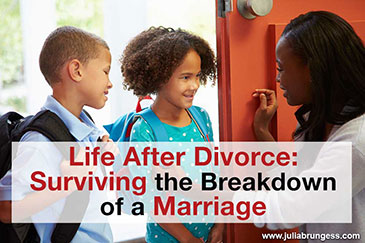
Life After Divorce: Surviving the Breakdown of a Marriage

If you are rediscovering how to live after divorce, you may find that everyday activities can inspire unexpected emotional responses. Finding ways to cope with life after divorce can help you to begin the next phase of your life in a positive frame of mind. Here are some ways to start the healing process after your divorce is final.       [space_20] Clean Your House If you are still living with reminders of your ex-spouse, it may be time to clean house and donate or dispose of items that may cause painful memories. Clothing, furnishings and other mementos of your marriage can be sorted into boxes for donation, returned to your ex-spouse or placed into trash bags for disposal. Clearing away the last remnants of a past relationship can help you open your heart to new possibilities that may be ahead.   [space_20] Spend Time with Family and Friends Reaching out to family members and friends can help you develop a support system that can carry you through this difficult period. Planning activities with your children can also provide a welcome distraction from unpleasant feelings. By engaging with close friends and family, you can prepare yourself for life after divorce.       [space_20] Grieve and Let Go It may be difficult to allow yourself to feel sorrow over the loss of your marriage. Allowing time for the grieving process can provide you with a valuable perspective on your own life and your future. Taking time to appreciate your qualities and adjust to your new living arrangement can help you proceed with future plans and goals in a more positive frame of mind. [space_20] Be Willing to Forgive Letting go of your anger and your resentment can be the first step toward beginning the healing process. These destructive emotions can cause you further pain and can prevent you from moving on with your new life. By forgiving your former partner and putting the past behind you, you can improve your emotional health and prepare yourself for whatever life has in store for you in the future. [space_20] Manage Your Finances Controlling your spending and limiting the amount of new debt you take on can help you maintain a healthy financial profile after your divorce. Indulging in a little retail therapy on occasion can be a good way to treat yourself. If this becomes a habit, however, you may need to curtail your spending and design a strict budget that fits your income level.             [space_20] Put on a Happy Face Even when you are feeling less than hopeful, it is a good idea to project a positive image and avoid emotional displays in front of your children. It is important to remember that divorce is difficult for the younger members of your family as well. By maintaining a cheerful demeanor, you can make things easier for yourself and your children during the aftermath of your divorce. It is important not to rush things after your divorce. Emotions can run high during this critical period. By taking one day at a time and working methodically toward your goal, you can live well and happily after your divorce.  

Life After Divorce: Surviving the Breakdown of a Marriage Read More »

Key Areas to Consider when Thinking About Divorce in California

    If you and your current partner are thinking about divorce in the state of California, consulting with an experienced attorney can help you navigate this difficult time more easily. Depending on your situation, you and your spouse may have a number of issues to resolve during the divorce process. Here are some of the most important areas to consider when planning for divorce in California.       Child Custody California courts often take an active role in protecting the welfare of minor children during a divorce. Some of the most common child custody issues include the following:    Concerns about education, religion, and medical treatment    Financial support for the needs of minor children    Living arrangements and visitation rights    The right of the custodial parent to move from one city or state to another    Allegations of domestic abuse or dependency on drugs or alcohol on the part of one parent Retaining the services of a family law attorney can help you to resolve these issues in the best interest of everyone involved. Depending on the age of your children, the courts may consider their preferences when determining who will be given primary custodial rights.   Finances Dividing your marital assets and debts in a fair and equitable manner can be a difficult task, especially if you and your spouse are not on good terms. If you are thinking of divorce, taking a financial inventory of all the assets and outstanding debts accrued during your marriage can be a good first step toward determining the best way to allocate responsibilities and resources fairly.           Spousal Support Depending on the length of the marriage and the financial resources available to each partner, the courts may order spousal support payments during the proceedings or for a definite or indefinite period of time after the divorce is final. For marriages of less than ten years in duration, the California court system typically limits spousal support payments to half the length of the marriage. If you and your partner are both working and earning a living income, however, you should not depend on spousal support payments when thinking about divorce. These arrangements are usually reserved for those without other means of financial support after the end of the marriage.   Child Support Child support payments may also be required to ensure the welfare of your minor children. These payments are usually made to the custodial parent and are intended to provide for the basic needs of the children. In most cases, child support payments are scaled to the income levels of the divorcing parents. If you are thinking of divorce, considering the financial impact of child support can help you prepare more effectively for these future expenses. Your attorney can help you manage the financial aspects of your divorce to ensure the most positive resolution of these issues. This can help you and your former partner enjoy a fresh start after the dissolution of your marriage.   If you or your partner are thinking of divorce, considering these issues before making any legal decisions can help you to prepare for the process more efficiently. Consulting with a qualified and experienced lawyer can be a good first step toward a fair and evenhanded resolution of your marital issues.   If looking for a divorce attorney in or around Fresno, California, contact the Law Office of Julia Ann Brungess. Call 559-226-4008 today!

Key Areas to Consider when Thinking About Divorce in California Read More »

Divorce and the Holidays

The holidays are normally about family coming together, but what happens when you and your spouse are negotiating a divorce during this special time of year? Big changes can bring about undue stress, especially when they come as the result of conflict. However, it is still possible to have a peaceful holiday season, even during such a big life change. Just because your family dynamic is changing doesn’t mean that you can’t guard your loved ones from the stresses associated with a more traditional, confrontational divorce. By choosing a collaborative divorce method, you and your former partner can work together to decide what is best for everyone. ● How will the holidays be spent during the divorce? ● At whose home will celebrations take place? ● Will you still spend them together or split the time between parents? Answering these questions with the support of a team of compassionate legal professionals can create an environment of cooperation in spite of irreconcilable differences. More importantly, you can decide on a way to share these changes with other family members, and especially children, who might be feeling anxiety about how a divorce will affect not only their holidays, but the rest of their lives as well. At the Law Offices of Julia Brungess, we believe that that through creative thoughtfulness and open communication it is possible to reach a resolution that can keep everyone’s best interests at heart. Divorce comes with trauma no matter what, but it is possible to lessen the impact and preserve important family relationships so you and your loved ones can look forward to many harmonious and joyful holiday seasons to come.

Divorce and the Holidays Read More »

Divorce Papers Served by Social Media, Is it Legal?

If you have decided to seek a divorce and are the one petitioning for the divorce, you must serve your spouse with divorce papers. You may be wondering how to do this or whether you have the option of serving them via social media. The answer to whether it is legal for divorce papers to be served by social media depends on the specifics of each case, and in what state the case is filed.   Initiating the Divorce Process in California According to California divorce law (Cal Rules of Ct 5.74)—when you decide to divorce—you must file a petition and obtain an issuance of summons to begin judicial proceedings. In California, a Petition for Dissolution of Marriage must be personally served on the other party.   Serving Divorce Papers As outlined in Cal Rules of Ct 5.68(a), there are four methods petitioners may use to serve divorce papers in California. Personal Service Substituted Service Service by Mail and Acknowledgment of Receipt Service by Publication or Posting A problem that can arise when using any of the methods previously mentioned is they all require the petitioner to be able to locate the recipient geographically. The majority of people seeking a divorce can usually find their spouses. However, there are situations where the petitioner is unable to physically find the recipient because they are purposely avoiding the process for being served or have been out of touch for long periods of time. It is in these situations that a court might consider a request acceptable to dip into the virtual world and allow service of the divorce papers using an approved social media platform. Social Media for Serving Divorce Papers   California law does not allow the Summons and Petition to be served using social media platforms, and the state has yet to allow a petitioner to serve divorce papers using Facebook. However, that could change.       The Divorce Case that May Pave the Way In the case of Baidoo v. Blood-Dzraku case in New York, Ms. Baidoo pleaded with the courts for permission to serve papers through Facebook because she was unable to locate her husband. In the case of Ms. Baidoo, the courts of New York decided that Facebook could be considered a service for publication or posting. If the courts had not approved Ms. Baidoo’s request to utilize Facebook, she would have been forced to take out a legal notice ad in the New York Daily News, which would have cost $1,000. In cases where all other measures for contacting the recipient have been exhausted, the person filing for divorce could petition the court for special permission to use social media. Using Facebook adds a layer of security that you will not have if posting a legal notice in a newspaper because, with Facebook, there is a notification and timestamp identifying when the recipient views a message. It is this detail that may open the door to social media service in CA. While serving divorce papers through social media is not yet allowed in CA, it may someday be acceptable to use social media platforms to serve divorce papers when all other measures have been exhausted, and the whereabouts of one spouse is unknown.   If you or someone you know needs help with the divorce process, the Law Office of Julia Ann Brungess can help! For more information, call 559-226-4008 today!

Divorce Papers Served by Social Media, Is it Legal? Read More »

When Collaborative Divorce May Be Your Best Option

When two people seek a divorce, it is often a tough time for all involved. In many situations, a couple agrees that they would like to make the divorce process as amicable as possible. At this point, a couple has the option to choose between two alternative dispute processes, mediation or collaborative divorce. Similar to marriages, there are no two divorces that are the same. In making this point, it is important to note that when deciding between collaboration and mediation, there isn’t a clear distinction proving that one is better than the other. In fact, determining the better choice will be directly dependent on each couple’s individual circumstances. Today, we will focus on when it may be best to pursue a collaborative divorce.   When There Are Children Involved Contrary to popular belief, it is not the divorce that has an adverse impact on children; it is the level of marital conflict that can exist as a result of the divorce. The collaborative divorce process helps protect children against this conflict and the negative implications associated with a divorce through promoting a problem solving environment. With a collaborative divorce, a child’s needs are made the priority so any actions taken are always in the child’s best interest. In making the decision to put children first, parents agree not to involve their children in disagreements. Parents will also refrain from using children as message carriers and will commit to speaking respectfully about each other. These actions help maintain a child’s health and well ­being because they promote a healthy environment where children are free to love both parents.   When You Want Control over the Outcome Avoid Litigation Unlike a traditional divorce where litigation is involved, a significant benefit to collaborative law is that you and your former spouse are in complete control of the decisions being made. Design Your Resolution Working with a collaborative attorney allows you and your spouse to develop an agreement that works best for you and your entire family.   When You Feel Comfortable Communicating and Being Honest The core belief supporting the collaborative divorce process is that divorce is a major life event that involves legal, emotional and financial elements. To help couples make decisions throughout the divorce process, the trained professional collaborative team guides the parties, answering questions and providing input along the way. It is important that when working with these professionals, you keep a clear and honest line of communication open because it can help ensure that the decisions made by you and your spouse are those that best serve your entire family.   When You Are Decisive It is true that you will have experts providing guidance during the collaborative divorce process. However, it is important to remember that you and your former spouse will ultimately decide what settlement terms work best. If you are unable to make a decision and reach an agreement during the collaborative process, you may find a more traditional form of divorce works better for you.

When Collaborative Divorce May Be Your Best Option Read More »

Dating After Divorce

It can be hard to imagine ever dating again while you are going through a divorce. It takes most of your emotional energy to remain present with the practical decisions that need to be made while you are navigating the heartbreak and loneliness that can often come along with a divorce. Like most things, it simply takes time before you feel you are ready to get back out in the dating world. One of the benefits of a collaborative divorce is that it is designed to reduce conflict and the resulting drama that can occur in a traditional divorce. When you approach your divorce with a healthy, communicative attitude, it can make room for you to begin to nurture yourself, and eventually, relationships with other people. Once you have turned the corner in your divorce and are starting to consider the future, it can be beneficial to begin by focusing on yourself. This can look like talking to a therapist, returning to a favorite hobby you haven’t had time for in a while, or going the extra mile to pamper yourself. A good diet, exercise, and lots of sleep are always important, but perhaps more so when you are going through a big life change. Even with a collaborative divorce, going from a married lifestyle to a single one can be take its toll. By giving yourself the necessary time out to nurture your own well being–both emotional and physical–you may find you have more to give when the time comes to date. If you are beginning to feel an interest in dating again, a great way to approach this with less pressure is to organize group outings. Whether you go to a new restaurant with your best girlfriends or get people from the office together for a night of bowling, you can start to exercise your social muscles as a single person while you meet new people. This can be more comfortable than jumping right into one-on-one dates, and by participating in fun activities you enjoy, you will naturally meet people with similar interests. If you meet someone who sparks your interest, remember that there is no rush. You can take it as slowly as you need to, and it’s important to be honest with the person about your emotional availability. A supportive, mature individual who is generally interested in you will be willing to wait and develop a friendship while you are processing your divorce. There is no “right way” or “right time,” so go with what feels healthy and natural. If your ex-spouse is still a part of your life (which is often the case if there are children involved), it can be thoughtful to let them know that you are dating again. If he or she was able to work with you through a healthy collaborative divorce process, chances are he or she will be willing to behave respectfully towards you and any new people who come into your life. If you are just starting the divorce process and can’t imagine dating right now, that’s ok and completely normal. Every relationship, couple, and divorce are unique. Listening to yourself, your partner, and your collaborative divorce team as you move through the divorce process is a great first step towards maintaining a healthy mental and emotional state that will serve you once you are ready to explore dating again.

Dating After Divorce Read More »

Rebuilding After Divorce

With the beginning of a new year, our thoughts naturally turn to beginnings and big changes that can help create a happier, healthier life. However, when you’re experiencing something as life changing as a divorce, simple resolutions aren’t the first thing on your mind. However, this doesn’t mean you can’t use the ringing in of the new year to help you refocus and begin to take steps towards rebuilding, both practically and emotionally. With a collaborative divorce, you will work with your partner and collaborative team to reach agreements surrounding your separation as peaceably as possible. This method, as opposed to a more traditional, combative approach, can leave time and energy for you to consider the possibilities of life after divorce. So where to begin? Here are a few simple suggestions to get you started on the road to a new life and new you: First, and perhaps most importantly, let yourself grieve. Even if the divorce was agreed upon by both individuals, it is important to give yourself plenty of time and patience to feel whatever you need to feel about the split. Everyone’s experience is different, so listening to yourself is very important. Find support where you need it, either professionally, with friends, or both. It’s ok to not be “normal” for a while. Get to know yourself. Our roles as spouses become a big part of our identity. What does it mean to be you when you are no longer someone’s husband or wife? Using a journal can be helpful to get reaquainted with who you are on your own. Try making a list of all of the things you already like about yourself and another list of things you’d like to work on and develop. Once you’re ready, make new friends. Oftentimes your social circle can be disrupted by a divorce. While your real friends will stand with you no matter what, you may find that people who you thought would be there for you aren’t picking up the phone. This is a great time to start meeting new people with similar interests as you. Look for activities you enjoy and you’ll naturally find yourself amongst like minded people. Celebrate being single. Once you have made your way through the darker side of divorce, start focusing on the positives of being single. This can look like taking a trip you’ve always wanted, going out on dates, or sleeping in on a Sunday. Don’t feel like there is a right or wrong way to do this; everyone has their own timeline and way of doing things when it comes to processing a divorce. By embracing the change and looking for the positives, you can encourage growth as No matter what, divorce will be challenging. Know that there will be low moments, but also look forward to, and never feel guilty about, the unexpected happiness and excitement that can come from rebuilding. Collaborative divorce provides a supportive and thoughtful environment where the practical issues can be worked out with a commitment to peace and resolution from both parties. This can set the tone for a positive and productive start to a new life.

Rebuilding After Divorce Read More »

Divorce and the Holidays

The holidays are normally about family coming together, but what happens when you and your spouse are negotiating a divorce during this special time of year? Big changes can bring about undue stress, especially when they come as the result of conflict. However, it is still possible to have a peaceful holiday season, even during such a big life change. Just because your family dynamic is changing doesn’t mean that you can’t guard your loved ones from the stresses associated with a more traditional, confrontational divorce. By choosing a collaborative divorce method, you and your former partner can work together to decide what is best for everyone. How will the holidays be spent during the divorce? At whose home will celebrations take place? Will you still spend them together or split the time between parents? Answering these questions with the support of a team of compassionate legal professionals can create an environment of cooperation in spite of irreconcilable differences. More importantly, you can decide on a way to share these changes with other family members, and especially children, who might be feeling anxiety about how a divorce will affect not only their holidays, but the rest of their lives as well. At the Law Offices of Julia Brungess, we believe that that through creative thoughtfulness and open communication it is possible to reach a resolution that can keep everyone’s best interests at heart. Divorce comes with trauma no matter what, but it is possible to lessen the impact and preserve important family relationships so you and your loved ones can look forward to many harmonious and joyful holiday seasons to come.

Divorce and the Holidays Read More »

couple-collaborating-about-divorce

How to Talk to Your Spouse About Collaborative Divorce

  Broaching the topic of divorce with a spouse is never easy. Even when both partners agree that divorce is the best option, navigating the emotional aspects of such a huge decision requires a lot of energy. Moving past the emotional work and into the practical issues that come along with divorce can feel daunting, and is oftentimes uncharted territory for everyone involved. Collaborative divorce, unlike traditional, can offer a supportive environment that encourages the type of healthy communication that can help alleviate much of that stress. First, you will have to decide whether you think a collaborative divorce is a healthy alternative for you. Is your partner capable and available to be a participant in a nonconfrontational, cooperative process? If you feel that there is mutual respect and a possibility for a peaceable outcome, collaborative divorce may be right for you. If possible, ask your partner what is most important to them during the divorce process. If you both agree that keeping the family’s well being at the center of the divorce is the number one priority, then suggesting a collaborative divorce to your spouse may be the right choice. Once you have decided to move forward with a collaborative divorce, make sure you and your spouse understand exactly what that will entail. Seeking out resources, both separately and together, can help answer questions and ease fears. Learning about the process <<link to last month’s blog>> together ensures you understand what will be expected of you both, and an informed agreement can be made on both sides. Expressing your commitment to reaching a peaceful resolution can help set a productive, respectful tone for the rest of the process. Next, you will both need to find individual representation that you are comfortable working with. Be transparent and use open communication in order to assure your spouse that you desire to work as a team as often as possible, even as you decide to go your separate ways. It may not always be easy to remain amicable, but a commitment to peace can go a long way in reducing stress and resolving disputes as they arise. For more information on the collaborative divorce process, contact the Law Offices of Julia Brungess.

How to Talk to Your Spouse About Collaborative Divorce Read More »

Healthy Communication with Your Children During Divorce

Knowing how to support your children through a divorce can feel daunting. Divorce brings change no matter what, but there are many ways you can help your child cope with the change while providing routine and keeping him or her informed to mitigate anxiety. With a collaborative divorce, you and your partner can discuss what strategies you will use together to keep your children from experiencing unnecessary stress. With the help of a collaboration team, a peaceful and healthy environment can be created so your children can continue to thrive, even through a difficult time. There are several ways you can help your child through your divorce. With a combination of clear communication and established routines, children can feel safe while they process such a large life event.   Ask and listen. Talk to your child and encourage him or her to share his or her fears and concerns about your new life after divorce. By giving them your ear, they will know they are important and will not be forgotten by either of their parents. Provide routine. Work with your spouse to create a routine and schedule, and stick to it. Who will be picking them up from soccer practice? Where will they spend the weekends? Creating this schedule from the beginning shows your children they can look to you for security and structure, no matter the situation. Remain neutral. Never speak poorly of your former partner or show jealousy for time or relationship shared with them by your children. By continuing to support the relationship your child has with your former life partner, you avoid creating feelings of conflict and anxiety that can arise for children during divorce.   Every family is different, and so dealing with divorce within your family is going to be a unique experience. However, by following basic tenets of respect and communication, you can set a healthy foundation to build from while you, your partner, and collaboration team work with the practical elements of your divorce process. At the Law Offices of Julia Brungess, we are committed to preserving the family dynamic whenever possible. If you and your partner are considering a divorce, contact us today to learn more about how a collaborative divorce can help keep your family at the center of your decision making during a difficult time.

Healthy Communication with Your Children During Divorce Read More »

The owner of this website has made a commitment to accessibility and inclusion, please report any problems that you encounter using the contact form on this website. This site uses the WP ADA Compliance Check plugin to enhance accessibility.
Scroll to Top